|
Minutes of 2004 FNCA Biofertilizer Workshop
24 - 28, January 2005
Hanoi, Viet Nam
Following the agreement at the Fifth FNCA Coordinators Meeting in March, 2004 in Tokyo, Japan, 2004 Workshop on FNCA Biofertilizer Project took place as follows,
Date: 24 - 28 January 2005
Venue:
Saigon Hotel, Hanoi
Sponsored By:
Ministry of Science and Technology (MOST) of Viet Nam,
Ministry of Education, Culture, Sports, Science and Technology (MEXT) of Japan
Local Organizers:
Institute for Nuclear Science and Technology (INST),
Vietnam Atomic Energy Commission (VAEC),
Vietnam Agricultural Science Institute (VASI)
In Cooperation of: Japan Atomic Industrial Forum Inc. (JAIF)
Participants: 1 each from China, Indonesia, Korea, Malaysia, the Philippines, 2 from Thailand, 4 from Japan and 9 from Viet Nam, total 20
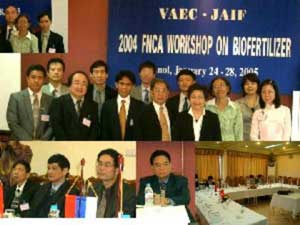
Opening addresses were delivered by Dr. Vuong Huu Tan, Chairman of VAEC, Dr. Vo Van Thuan, Director of INST/VAEC and Dr. Tadashi Yokoyama, Project Leader of Japan.
In Session1, a total eight country reports were presented. The central theme of this presentation was “Improvement of soil microbial activities”. The reports include status of Biofertilizer activities in each country and the application of irradiation for sterilization of carriers.
In sessions 2, 4 and 5, a total seven special lectures were presented, three from Viet Nam, one from Thailand and three from Japan.
In Session 3, “Sterilization by Irradiation” and “Use of the Nuclear Facilities” were discussed. The points discussed and agreed upon were as follows:
<Sterilization by Irradiation>
| |
・ |
Sterilization of carrier materials by irradiation (g and EB) is still not carried out widely in participating countries, especially for commercial production of biofertilizer.
|
| |
・ |
Since there is a diverse biofertilizer carrier involved (peat, compost, filter cake, and coconut coir dust) there is still a need to study in depth effective sterilization doses for each carrier material. These include types and sizes of packaging materials as well as storage time for biofertilizer products. |
| |
・ |
Close cooperation with irradiation service in each country is needed for studies on sterilization of carrier materials. |
<Use of the Nuclear Facilities>
The nuclear facilities used in most countries are Co-60 and Electron Beam irradiators. All FNCA countries has their irradiation facilities to operate the irradiation for the carriers and other research substances. Besides the sterilization by steam and heat, some countries have been using irradiation to sterilize their carriers. The problem of cost of irradiation and incomplete sterilization are the constraints for using irradiation. The help from FNCA to facilitate between institutes and coordinator will promote the use of irradiation in each country. With increase demands on irradiation of Biofertilizer materials, cost will be decreased.
In Session5, “Promotion of Biofertilizer Use by the farmers” and “Field Demonstration” were discussed. The points discussed and agreed upon were as follows:
<Promotion of Biofertilizer Use by the farmers>
The promotion of Biofertilizers use by farmers has been done in some FNCA countries by transfer of technology to farmers via field demonstration, advertising and simple manuals. The Biofertilizers that have been promoted to the farmers in most countries were rhizobium, mycorrhiza and PGPR. In Japan, the Biofertilizer used is rhizobium with azuki bean while in the other countries, it has been used to many kinds of leguminous crops. The promotion is constraint in most country because the lack of inoculum and some kinds of inoculum such as mycorrhiza is expensive. The promotion of Biofertilizer will be more successful if it was promoted by both government and the company selling the Biofertilizer product with proper quality control. In the future the food safety demand and environmental crisis will bring Biofertilizer having more important role in agriculture.
<FNCA Field Demonstration and N-15 Experiments>
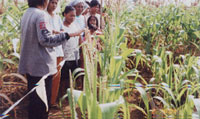
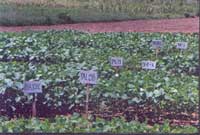
Field demonstrations have been conducted in the respective participating countries. Field demonstrations were conducted both on large scale and at research level. Most of the results indicate that Biofertilizer could supplement some chemical fertilizers. Some participating countries however is considering to focus on some areas such as use of PGPR on rice in Malaysia. Experiments using N-15 have been carried out but are very limited due to the high cost of isotope N-15 labeled fertilizer. FNCA coordinator could ask the assistance from IAEA for this matter.
<Biofertilizer Manual>
・ |
Sharing parts of writing manuals as follows; |
| |
- |
Chief Editor: Viet Nam |
| |
- |
General methodology: Japan |
| |
- |
Quality control: Korea and Viet Nam |
| |
- |
Rhizobia: Viet Nam |
| |
- |
Mycorrhiza: Malaysia and Thailand |
| |
- |
Associative nitrogen fixing bacteria: China, the Philippines and Indonesia |
| |
- |
Phosphate solubilizing microorganisms: Korea
|
・ |
Japanese group presented their part of manual as the first version. Other participating countries reported their progress in drafting of manuals.
|
・ |
Suggestions and comments have been given for the completeness of the manuals. All manuscripts of manuals will be submitted to JAIF before the 2005 FNCA workshop on biofertilizers, which will be presented at the workshop and edited by JAIF.
|
・ |
JAIF will deliver the format of manuals to each responding country.
|
・ |
The final edition will be published at the end of 2006. |
In Session 6, “General Discussion”, Review of 2004 was presented in the respective country reports in each country. The theme for the next workshop in 2005 is field trial which will include yield response, feasibility study and technology transfer. The use of Biofertilizer carrier sterilized by irradiation as one of the sterilization methods to conduct the field demonstration was recommended by Japan.
<Biofertilizer Group Newsletter>
Newsletter issue No.5 will be published by Malaysia on May and No.6 by Indonesia on September 2005.
<Collaboration with IAEA, ICRISAT or JSPS>
FNCA will encourage collaboration with the above mentioned agencies.
<Next Workshop>
The next workshop was decided to be hosted by Philippines. The Philippines is honored to host such workshop.
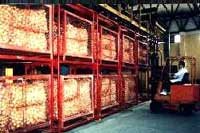
On the third day, participants made technical visit to Institute for Nuclear Science and Technology, VAEC and Hanoi Irradiation Center and looked around the “Center for radiation protection and monitoring” and Co-60 facility.
The Minutes were discussed and agreed upon by all participants in the Workshop. This will be reported at the Sixth Coordinators Meeting to be held in March 2005 in Tokyo, Japan.
All overseas participants expressed their gratitude to the hosting organization, INST, VAEC and VASI for their great efforts and hospitalities, and having made this Workshop successful and memorable one.
|













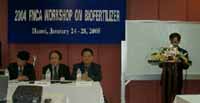 Dr. Vuong Huu Tan, Chairman
of VAEC and Dr. Vo Van Thuan, Director of INST/VAEC
gave opening remarks and welcomed the participants.
Dr. Tadashi Yokoyama, Project Leader of Japan delivered
the address on behalf of Japan
Dr. Vuong Huu Tan, Chairman
of VAEC and Dr. Vo Van Thuan, Director of INST/VAEC
gave opening remarks and welcomed the participants.
Dr. Tadashi Yokoyama, Project Leader of Japan delivered
the address on behalf of Japan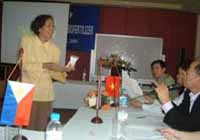 Country
reports with theme of “Improvement of Soil Microbial
Activities” were
presented.
Country
reports with theme of “Improvement of Soil Microbial
Activities” were
presented.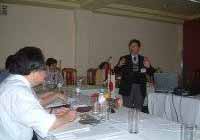 A total seven special lectures
were presented, viz. three from Viet Nam, one from Thailand
and three from Japan.
A total seven special lectures
were presented, viz. three from Viet Nam, one from Thailand
and three from Japan.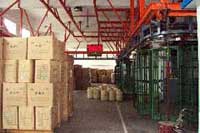
 On the third day, participants
made technical visit to Institute for Nuclear Science
and Technology, VAEC and Hanoi Irradiation Center,
which included the “Center for radiation protection
and monitoring” and Co-60 facility.
On the third day, participants
made technical visit to Institute for Nuclear Science
and Technology, VAEC and Hanoi Irradiation Center,
which included the “Center for radiation protection
and monitoring” and Co-60 facility. 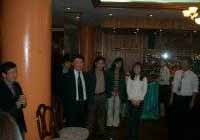 Workshop was successful with participants from 8 countries
and great organizing and warm hospitalities of INST,
VAEC and VASI.
Workshop was successful with participants from 8 countries
and great organizing and warm hospitalities of INST,
VAEC and VASI.