MENU
|
| FNCA 2008 Workshop on Application of Electron Accelerator |
|
Report>>
Minutes>>
Program>>
List of Participants>> Report of
FNCA 2008 Workshop on Application of Electron Accelerator
- Radiation Processing of Natural Polymer -
27 - 31 October 2008
Shanghai, China
 |
- Background
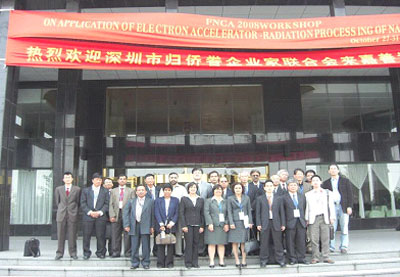
The 2008 FNCA workshop on Application of Electron Accelerator - Radiation Processing of Natural Polymers - was organized by the Ministry of Education, Culture, Sports, Science and Technology (MEXT), Japan and the China Atomic Energy Authority (CAEA). It was executed by the Shanghai Institute of Applied Physics (SINAP) and Nuclear Safety Research Association (NSRA) of Japan in cooperation with the International Atomic Energy Agency (IAEA).
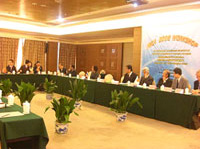
The workshop was attended by experts on application of electron accelerator and radiation processing of natural polymer from FNCA participating countries namely: Bangladesh (1), China (5), Indonesia (1), Japan (5), Malaysia (2), the Philippines (1), Thailand (1) and Vietnam (1). In addition, IAEA/RCA Project Lead Country Coordinator (PLCC) from the Philippines and experts representing RCA/Non-FNCA member countries namely India (1), Pakistan (1) and Sri Lanka (1) also participated in the workshop.
- Outline of the Workshop
<Opening Session>
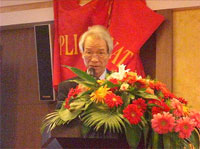
Dr. Sueo Machi, FNCA Coordinator of Japan, and Dr. Junxin Zhang, Project Officer of CAEA, gave welcoming addresses. They hoped that this workshop and open seminar would be useful and informative and he also expected the participants to formulate concrete and specific project plan for 2009 to 2011 through active and constructive participation. After the welcoming address, Dr. Machi delivered a talk on “Highlights of FNCA Activities for Sustainable Development in Asia”. In his speech, it was reported that 11 on-going projects and 1 study panel of FNCA have been implemented successfully and has brought tangible outcomes.
Dr. Kume, FNCA project leader of Japan, presented the status of Application of Electron Accelerator for the FNCA EB projects Phase 2, focusing on radiation processing of natural polymers. Since this workshop is the last meeting of the three-year project (2006-2008), it is requested to evaluate the progress of projects on radiation degradation of polysaccharides for plant growth promoter and radiation crosslinked hydrogels for medical and water absorbent.
Ms. Abad, IAEA/RCA Project Lead Country Coordinator (PLCC) from the Philippines, presented one of their ongoing projects entitled “Radiation Processing Applications for Health and Environment” which is being participated by 14 member states. In a meeting held by all participating members of RAS 8/106 and representatives from FNCA in Bangkok, Thailand in 2007, proposals have been made regarding a possible collaboration between RCA and FNCA.
The final presentation of this session was delivered from Dr. Wenyan Zhao of China Isotope and Radiation Association (CIRA). In his presentation of the status of radiation processing in China, he explained that the irradiation facility has been increasing rapidly and the throughput became threefold in the past ten years.
<Open Seminar on Application of Electron Accelerator/ Exhibition>
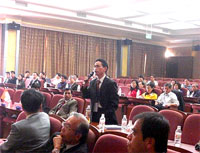
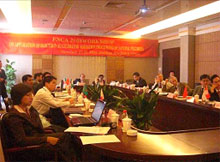
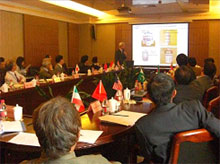
The open seminar on “Application of Electron Accelerator” was held in the afternoon of the first day of the workshop. Around 90 participants came from industries, universities, research institutes and members of FNCA Workshop.
First of all, Mr. Wei-lun Miao, Local Governor of Jiashan County, and Dr. Hongije Xu, Director of Shanghai Institute of Applied Physics, delivered a welcome address, followed by 9 presentations.
Dr. Namba, Director General of Takasaki Advanced Radiation Research Institute, Japan Atomic Energy Agency (JAEA), attracted the audience with presenting the remarkable result of the study on the collection of rare metals from hot spring using grafting technology, broadcasted on TV recently.
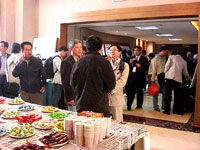
An exhibition that consisted of posters and product display was also held and participated by Bangladesh, China, Japan, Indonesia, Malaysia, Philippines, Thailand and Vietnam.
<Session 1. Country Report>
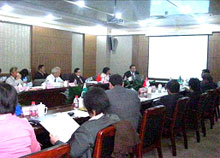
A total of 11 country reports and one RCA report on recent progress, R&D and commercialization activities on radiation processing of natural polymers were presented by 8 countries including 3 RCA countries.
Dr. Khairul, Director of Radiation Processing Technology Division Malaysian Nuclear Agency, introduced the field trial study on the application of radiation degraded chitosan as plant growth promoter and plant elicitor. He reported that the rice seeds under oligo-treatment has shown high growth rate.
Then, Ms. Aranilla, Science Research Specialist of Philippine Nuclear Research Institute (PNRI), reported the phase 2 activities in the semi-commercialization project of PVP-carrageenan hydrogel. She introduced some current activities such as testing the capability of the newly constructed pilot plant.
<Session 2. Activities and Achievement of IAEA/ RCA>
The experts of IAEA/RCA countries including India, Pakistan, and Sri Lanka have delivered their report on development activities on radiation processing of natural polymers. Also Ms. Abad enumerated the activities under the IAEA/RCA RAS 8/106 entitled “Radiation Processing Applications for Health and Environment”. She reported on the progress of research activities in 14 member countries as well as on some regional training courses.
<Session 3. Discussion 1: Hydrogel for Wound Dressing and Other Medical Applications>
Dr. Kamaruddin, Manager of Radiation Modification of Polymer Group, Malaysian Nuclear Agency, deliverd the lead speech for this session's discussion. It was reported that Korea and China have already commercialized their wound dressing and it is pre-commercialized in the Philippines.
He insisted that the cooperation among Member States can lead to its commercialization, and also expected to form a interest group in which experiences and technology know- how could easily be transferred if needed.
<Session 4: Discussion 2: Hydrogel for Super Water Absorbent Used in Agriculture>
Dr. Yoshii, Coordinator of Industrial Cooperation Promotion Department, Japan Atomic Energy Agency (JAEA), reviewed the current research status of hydrogel as super water absorbent used in agriculture.
The commercially available Sky gel is a chemically crosslinked poly-acrylic acid with absorption characteristics of 100ml / 1g dry gel and with a keeping period of 2-3 years. The proposed alternative is with the use of radiation crosslinked carboxy-methyl cellulose or starch grafted poly-acrylic acid.
<Session 5.  Discussion 3: Plant Growth Promoter (PGP)> Discussion 3: Plant Growth Promoter (PGP)>
Dr. Hien, Head of Research and Development Department, Vietnam Atomic Energy Commission (VAEC), presented a summary reviewing the progress, current status and challenges in the application of irradiated natural polymers as plant growth promoter. He mentioned some field test on several kinds of plants, vegetables, tea, coffee, rice, sugarcane, chili, potato in some countries. The economic calculations have been done by Vietnam and Indonesian and showed more benefits in using irradiated polysaccharides. Large field test on sugarcane is being done in Vietnam using the irradiated chitosan from BATAN and the one produced by VINAGAMA (using synergy with H2O2) for comparison. The results of this field test will be realized in one year.
<Session 5.  Demonstration of Large Scale Production of Oligochitosan in BATAN> Demonstration of Large Scale Production of Oligochitosan in BATAN>
Dr. Gatot, Senior Scientist in Center for the Application of Isotopes and Radiation Technology, National Nuclear Energy Agency (BATAN) gave a report on the demonstration on large scale production of oligochitosan using gamma irradiation held in BATAN, August 4-8, 2008. He introduced the whole process from standardization of chitosan to its packing. In discussion, it was mentioned that adding antibacterial agent (e.g. Silver nanoparticles) to the chitosan solution can prevent growth of bacteria and fungi.
<Session 5.  Application of Radiation Degraded Chitosan in Animal Feed> Application of Radiation Degraded Chitosan in Animal Feed>
Dr. Wu, Director of Research Center for Accelerator and Radiation Processing, Shanghai Institute of Applied Physics (SINAP), presented his study on radiation degraded chitosan that was tested in growing pigs and fish as a feed additive. It was found that the chitosan was effective to improve the immune system of fish and animals. Consequently, China has planned to increase the production of aquaculture and animal feeds from 10 tons/yr to 500tons/yr.
<Session 6. FNCA Guidelines on Development of Hydrogel and Oligosaccharides by Radiation Processing>
Dr. Kudo, Associate Professor, University of Tokyo, distributed the draft and presented the outline of the Guideline. It was decided that the Guideline is available by uploading in pdf file through the FNCA website and can be consequentially updated by national project leaders.
<Session 7. Evaluation of FNCA Project Activities>
Dr. Kume presented a draft summary on the evaluation of project activities. He appreciated that the member countries reciprocally shared the experiences, data and technical information on radiation processing of natural polymers such as alginate, chitosan and carrageenan. Some publications and one patent brought from this project were also highly appreciated. In addition, the field test using irradiated chitosan at BATAN is expected to be continued to obtain the results. It was also emphasized that the efforts should be on-going to determine the economic viability of the products and to transfer the technique to the end user.
<Session 8. Implementation Plan in Phase 3>
For this session, Dr. Machi chaired and discussed the summary of activities to be implemented in the phase 3 of the project such as Plant growth promoter, Elicitor -disease resistance, insect resistance and Aquaculture and animal production. In addition, further research and development is required to minimize remained monomer and to develop efficient technique to crush hydrogel to produce dried pellets of SWA.
<Technical Visit>
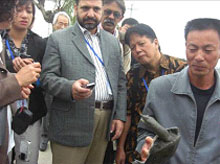
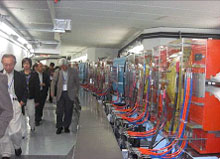
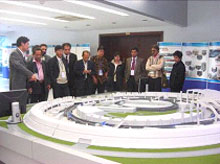
Workshop participants visited the aquaculture company, the Shanghai Synchrotron Radiation Facility and the El Pont Radiation Technology Company. At the aquaculture company, the participants learned about the application of irradiated chitosan as feed components for fish and turtles in order to improvement of immune system.
|
Minutes of
FNCA 2008 Workshop on Application of Electron Accelerator
- Radiation Processing of Natural Polymer -
27-31 October 2008
Shanghai, China
- Introduction
The 2008 FNCA workshop on Application of Electron Accelerator - Radiation Processing of Natural Polymers - was organized by the Ministry of Education, Culture, Sports, Science and Technology (MEXT), Japan and the China Atomic Energy Authority (CAEA). It was executed by the Shanghai Institute of Applied Physics (SINAP) and Nuclear Safety Research Association (NSRA) of Japan in cooperation with the International Atomic Energy Agency (IAEA).
This is the 8th workshop of the project and the objectives were (1) to review current status of R&D in terms of processing and properties of products to meet user’s needs, (2) to discuss strategic plan for commercial application including cooperation with end-users, (3) to promote possible cooperation and sharing of R&D work among member countries to achieve common goal, and (4) to formulate project implementation plan for 2009-2011.
The workshop was attended by experts on application of electron accelerator and radiation processing of natural polymer from FNCA participating countries namely: Bangladesh (1), China (5), Indonesia (1), Japan (5), Malaysia (2), the Philippines (1), Thailand (1) and Vietnam (1). In addition, IAEA/RCA Project Lead Country Coordinator (PLCC) from the Philippines and experts representing RCA/Non-FNCA member countries namely India (1), Pakistan (1) and Sri Lanka (1) also participated in the workshop. Annex 1 shows the list of participants.
- Opening Session
The opening session was chaired by Dr. Guozhong Wu, SINAP. Dr. Sueo Machi, FNCA Coordinator of Japan, delivered the welcoming address. On behalf of the MEXT and FNCA, he heartily welcomed all participants in the workshop. He also expressed his deep appreciation to the China Atomic Energy Authority (CAEA) and Shanghai Institute of Applied Physics (SINAP) for generously hosting the workshop and to the IAEA/RCA for its cooperation. He hoped to find the workshop and open seminar useful and informative and wished the participants to formulate concrete and specific project plan for 2009 to 2011 through active and constructive participation. The opening address was delivered by Dr. Junxin Zhang, Project Officer of CAEA. He expressed his warm welcome to all participants and pointed that the initiation of the workshop on accelerator application under FNCA promoted regional cooperation and technology exchange and benefited the abilities of accelerator application in different areas.
Each participant briefly introduced themselves and thereafter the workshop program was presented and adopted without changes. It is given in Annex 2.
2.1 Highlights of FNCA Achievements
Dr. Machi delivered a talk on “Highlights of FNCA Activities for Sustainable Development in Asia”. There are 11 on-going projects and 1 study panel of FNCA which have been implemented successfully to have tangible outcome. For agriculture, bio-fertilizer manufactured by using radiation sterilization of carrier has shown excellent effects to enhance yield of grain legume. The FNCA project on mutation breeding will focus on development of new varieties of rice which have better quality. Projects for human health are cancer therapy by radiation and nuclear medicine. FNCA has developed a new and more effective protocol to cure cervix uterine cancer. Recovery rate was 73%, 5 years after treatment. Human resources development (HRD) is the most important challenge in FNCA countries. FNCA is supporting HRD of member countries through the establishment of ANTEP (Asian Nuclear Training and Education Program). For nuclear power FNCA is implementing the study panel on nuclear power for sustainable development in Asia. Based on the panel conclusion, the 8th FNCA ministerial meeting in Tokyo, December 18th, 2007, agreed the joint communique to insist that the Clean Development Mechanism (CDM) of Kyoto Protocol should include nuclear power.
2.2 Status of FNCA Activities on Radiation Processing of Natural Polymers
Dr. Kume, FNCA project leader of Japan, presented the status of Application of Electron Accelerator for the FNCA EB projects Phase 2, focusing on radiation processing of natural polymers. Since this workshop is the last meeting of the three-year project (2006-2008), it is requested to evaluate the progress of projects on radiation degradation of polysaccharides for plant growth promoter and radiation crosslinked hydrogels for medical and water absorbent.
2.3 IAEA/RCA Project on Radiation Processing of Natural Polymers
Ms. Abad presented the significant role of IAEA in fostering developments in radiation technologies of high value. Among the significant ones are hydrogel dressings, oligo-polysaccharides as plant growth promoter and elicitor and a wide range of new products with great economic potential. In line with the application on radiation technology for environmental protection, IAEA has taken a lead role in promoting and supporting projects related to the use of electron beam or gamma radiation for flue gas, waste water and sludge treatment. IAEA/ RCA RAS 8/106 entitled “Radiation Processing Applications for Health and Environment” is currently being implemented. This regional project specifically aims to promote wider utilization of novel materials for health and environmental application which is being participated by 14 member states. In a meeting held by all participating members of RAS 8/106 and representatives from FNCA in Bangkok, Thailand, April 23-27, 2007, proposals have been made regarding a possible collaboration between RCA and FNCA. This collaboration was made to avoid duplication and to synergize the activities of each group. This has already been implemented through the IAEA sponsoring of non-FNCA member countries (India, Pakistan and Sri Lanka) and the Project Lead Country Coordinator (PLCC) of the IAEA RAS Project in FNCA meetings. The IAEA/ RCA- FNCA collaboration will further strengthen the radiation processing program in the region.
2.4 Current Situation and Development Tendency of China's Radiation Processing Industry
Dr. Wenyan Zhao of China Isotope and Radiation Association (CIRA) presented the status of radiation processing in China. The major fields developed were 1) Radiation chemical material and product; 2) Irradiation service for food storage and preservation, conservation of goods, sterilization of medical articles; 3) Environment treatment, and public safety; 4) Irradiation facilities of EB, γ source and subsystem. The irradiation facility increases rapidly, i.e. 1) Electron accelerators: more than 130; total power: 8258 kW; 2) Co-60 irradiation facility: more than 120; total design-load capacity: more than 100 million Ci, actual load capacity: 40 million Ci. The throughput increased threefold in the past ten years.
- Open Seminar on Application of Electron Accelerator
The open seminar on “Application of Electron Accelerator” was held in the afternoon of the first day of the workshop. Around 90 participants came from industries, universities, research institutes and members of FNCA Workshop. An exhibition that consisted of posters and product display was held and participated by Bangladesh, China, Japan, Indonesia, Malaysia, Philippines, Thailand and Vietnam.
Mr. Wei-lun Miao, Local Governor of Jiashan County delivered a welcome address. He expressed his warm welcome to all the participants and wished for the success of the seminar and workshop. The opening address was given by Dr. Hongije Xu, Director of Shanghai Institute of Applied Physics. On behalf of their Institute, he expressed the pleasure to host the seminar on Radiation Processing of Natural Polymers and emphasized that such kind of activities will greatly help promote the industrial applications of radiation processing of natural polymers in China and create collaboration among participating countries.
There were 9 presentations during the open seminar given as follows:
3.1 Trend of Radiation Processing for Sustainable Development by Dr. Sueo Machi (Japan)
In this paper, the trends of radiation processing for sustainable development and people's welfare were presented. Energy and material saving industrial processes, such as radiation processing, can be applied for polymer modification and production, sterilization of medical supplies and food packaging, environmental protection, food irradiation and ion implantation for semi-conductor production. It is foreseen that industrial application of radiation processing will further grow in modification of polymeric materials. Radiation technology for clean environment should be developed to address world common problems. In addition, the development of reliable and less expensive electron accelerators with large capacity is an important challenge for next civilization.
3.2 Accelerators and their Applications in Shanghai Institute of Applied Physics (SINAP) by Dr. Deming Li (China)
The speaker presented a brief history of Shanghai Institute of Applied Physics (SINAP) and the timeline of accelerator development in the institute. SINAP is one of ninety national institutes in Chinese Academy of Sciences (CAS), specialized in researches of nuclear techniques. In 1964, they built the first self-made 1.2MeV Cyclotron in China. In 1998, they successfully built the Super-sensitive Mini-Cyclotron Mass Spectrometer devoted to C-14 Dating,. Since 1999, SINAP set up the new goal for research center of advanced photon science and applied physics based on Accelerator. Current developments include low energy electron curtain accelerator used for rubber emulsion vulcanization, high power electron accelerators for coal-burning flue gas desulfuration and denitration and development of 5 MV dynamitron.
3.3 Recent Achievements of Radiation Processing Application in Japan by Dr. Hideki Namba (Japan)
In this presentation, principles and features of radiation processing were explained. According to the applied technologies of radiation processing namely crosslinking, grafting, decomposition by EB/γ-ray, and crosslinking and ion implantation by ion beams, recent achievements on radiation processing in Japan, especially in JAEA-Takasaki, were classified. The remarkable result of the study on the collection of rare metals from hot spring using grafting technology, broadcasted on TV recently, was also presented.
3.4 Economic Scale of Radiation Application in Japan by Dr. Tamikazu Kume (Japan)
The presentation tackled the economic scale of radiation application in Japan. The economic scale of nuclear field in 2005 was 4,112 B JPY for radiation application (46%) and 4,741 B JPY for nuclear energy (54%) playing a role of “two wheels of one cart” in nuclear field and the total 8,853 B JPY constitutes 1.8% of GDP. Radiation application in Japan is steadily rising and contributes to improve public welfare and living standard.
3.5 Overview on development and commercialization of sago-starch hydrogel by Dr. Kamaruddin Bin Hashim (Malaysia)
In this report, the stages in the development and commercialization of sago starch hydrogel were presented. Extensive research and development activities, licensing and transfer technology agreements with local sago manufacture company and active/effective cooperation between Nuclear Malaysia researchers and company staffs resulted in the very successful commercialization of sago starch hydrogel as facemask. The product has already made its way into the Malaysian market under the trade name, EcoBelle HydroMiracle Mask.
3.6 Plant Growth Promoter from Radiation Processing of Natural Polymers by Dr. Nguyen Quoc Hien (Vietnam)
The effect of plant growth promotion of oligoalginate and oligochitosan prepared by radiation degradation for different kinds of plants (tea, coffee, carrots, cabbage, rice and sugarcane) was presented. Oligochitosan, aside from growth promotion effect, has also shown high elicitation effect on rice and sugarcane. Based from experience, it was recommended to find cooperation with a very suitable company in order to fast track commercialization of the product.
3.7 Hydrogel for Wound Dressing and Super Water Absorbent by Radiation Crosslinking of Polymers in Japan by Dr. Fumio Yoshii (Japan)
The different stages for the development of hydrogel for wound dressing starting from the research and development, clinical testing up to the final commercial form were presented. In addition, a novel cellulose gel obtained by radiation crosslinking of cellulose derivative in paste form was developed for use as super absorbent material. The potential applications for the cellulose gel were given.
3.8 Current Status of Electron Beam System Supplied by NHV Corporation by Mr. Keizo Akita (NHV Corporation Shanghai, China)
The current status of electron beam systems supplied by NHV Corporation Group was presented. The different applications of the EB systems manufactured by NHV are as follows: wire and cable (23.7%), automobile tire (23.4%), R&D (20.8%), polyethylene foam (9.0 %), shrinkable tube (4.5%), curing and converting (7.1%), flue gas treatment (2.6%), sterilization (1.0%) and others (8.0%).
3.9 Introduction of EL Pont Mid and High Energy Accelerators and Irradiation Processing by Mr. Yanwei Wu (Wuxi El Pont Radiation Technology Co., Ltd, China)
The accelerator and irradiation processing of El Pont was presented in this report. The company profile of El Pont Radiation Technology located in Wuxi city (China) was introduced together with the company's capability on R&D and manufacture of accelerator. The enumeration of accelerator applications and the situations of industrialization in China were also presented. High energy and low energy self-shielded irradiation accelerators of El Pont was also reported.
- Country Reports
A total of eleven country reports and one RCA report on recent progress, R&D and commercialization activities on radiation processing of natural polymers were presented. The participants had the opportunity to discuss, exchange opinions and share their experiences on issues related to the subject of the workshop. The summary of the country reports is as follows:
4.1 Bangladesh
Mr. Zahirul presented a report on the biological effect of gamma irradiated sodium alginate on red amaranth (Amaranthus cruentus L). Aqueous solution (3%) of sodium alginate was irradiated by gamma radiation (Co-60) of various total doses (12.5 to 50.0 kGy). Red amaranth was cultivated in 18 different individual plots and sodium alginate solution (150 ppm) was applied after 10 days of seedlings at every 6 days interval. The sodium alginate irradiated at 37.5 kGy applied at a concentration of 150ppm solution showed the best performance. In addition, he also presented a report on “Improvement of mechanical properties of natural polymers using UV radiation”. The mechanical properties such as tensile strength (TS) and elongation at break (Eb) of sodium alginate films were optimized in terms of polyethylene glycol (PEG) concentration, soaking time and radiation dose of intensities. The highest polymer loading (PL) and TS of the film were found to be 7.1% and 37.9 MPa respectively for 3 minutes soaking in 5% EG containing formulation at 20th pass of UV radiation. The highest value of Eb (22%) was obtained at 1 minute soaking time at 15th passes of UV doses.
4.2 China
Dr. Guangyin Chen (Nanjing University, China) delivered a presentation on the effects of degraded chitosan by irradiation on physiological traits of drought during wheat seedling stage. The objective of the study was to determine the extent to which chitosan affects plant biomass production under drought stress. The study also aimed to investigate the effect of chitosan on the antioxidant activities related to the resistance of wheat cultivars in the water limited condition. Two kinds of wheat cultivars, Hanxuan No.10 (drought high-resistant) and Wan No.46 (drought light-resistant), were treated with oligochitosan irradiated at 50kGy (T1), 200 kGy (T2), 500 kGy (T3). The effect of irradiated chitosan was correlated to growth traits (germination rate (%), water content (%), root dry weight/g, and root/shoot ratio) and physiological/biochemical traits (soluble protein content, chlorophyll content, MDA (malondialdeyde) content, SOD (superoxide dismutase) activity, CAT (catalase) activity, POD (peroxidase) activity). The study concluded that irradiated chitosan could improve the growth traits, the ability to eliminate reactive oxygen species and protecting the functions of bio-membrane. The drought resistance of wheat seedlings was also improved and made the performance period last for more than 7 days.
4.3 Indonesia
Dr. Gatot made a presentation on field studies on irradiated chitosan for growth promotion of plants. The field test on chili plants has been completed and data using irradiated chitosan for red chili plant showed an increase in production yield of about 60% as compared to the use of non-irradiated chitosan. Field test study and economic analysis for tomato plant were also carried out as compared to the common method used by farmers. Results showed a 35% productivity increase. The profit using irradiated chitosan was twice compared to the profit obtained using the common method by farmers. Lastly, on-going R&D activities on oligochitosan for food preservation were also mentioned.
4.4 Japan
Dr. Yoshii delivered a report on the application of oligochitosan for agricultural field and paper modification by CMC. From the results of field tests in Vietnam, Indonesia, and Japan, oligochitosan with a molecular weight of 10,000 Da, was found to be effective as a plant growth promoter. Cost analysis of chitosan irradiation in solid and solution phase was reported. The estimated cost to produce oligochitosan is 4.5 US$ for liquid irradiation and 5.2 US $ for solid irradiation. Current status on the application of CMC gels as coating for Washi paper to enhance strength and lessen shrinkage was also presented. Continuous production of the paper is being done and aging test is being carried out.
4.5 Malaysia
Dr. Khairul presented his report on the initiation of field trial study on the application of radiation degraded chitosan as plant growth promoter and plant elicitor. The pilot scale production of oligochitosan using a continuous liquid gamma irradiation plant (RAYMINTEX) at Nuclear Malaysia was designed to produce 1.5 - 2.0 tons of oligochitosan per cycle. Subsequently, the field trial of using oligochitosan for rice crops of 24 hectare is being carried out (17 Oct 08 - Feb 09) with the cooperation of a government link company, FELCRA (M) Berhad that provides and manages the paddy plantation. Two experts from Vietnam (Dr. Hien) and Japan (Dr. Kume) have been invited and assisted Malaysia to conduct the irradiation and field trial. The initial laboratory experiment on germination of rice seeds showed that the rate of germination of rice seeds under oligo-treatment was slower than water treatment. However, at 5 days of germination period, the number of seeds that germinated under water treatment and under oligochitosan treatment was almost the same. On the other hand, it was observed that the growth rate of leaves for rice seeds under oligochitosan treatment was higher than under water treatment. Oligochitosan treated leaves were also greener than water treated only. Further work is still to be carried out while the field trial study will be completed in March 2009.
4.6 Philippines
Ms. Aranilla enumerated in her report the phase 2 activities in the semi-commercialization project of PVP-carrageenan hydrogel. The product has been given the brand name “Skin-up” for marketing. The different activities that were carried out include testing the capability of the newly constructed pilot plant, establishment of QA/QC system for the production of hydrogel, dosimetry works for full capacity of the upgraded irradiator and collaboration with the private company (Biotecos) to conduct market acceptability study. The current R&D activities on radiation processing of natural polymers were also lined up to basic studies on characterization of irradiated carrageenan fractions, biological testing and antioxidant properties of irradiated and non-irradiated commercial grade and dried carrageenan seaweed sap for tissue culture and carboxymethylation of kappa-carrageenan seaweed and crosslinking of derivative for synthesis of super absorbent material as soil conditioner.
4.7 Thailand
Dr. Phiriyatorn gave a presentation on the activities on radiation processing of natural polymers in Thailand. Biodegradable starch-based low density polyethylene (LDPE) polymer blends were prepared by gamma irradiation. The effect of gamma radiation on mechanical properties and thermooxidative degradation of polymer blends were investigated. The results indicated that gamma radiation induces formation of carbonyl groups in the blends. Metal adsorbent containing the hydroxamic acid groups was successfully synthesized by radiation-induced graft copolymerization of methyl acrylate (MA) onto cassava starch. The ability of the adsorbent to adsorb various metals is under investigation. Low molecular weight chitosan was obtained by gamma radiation degradation and molecular weight fractionation. Oligochitosan has noticeable effects on plant growth rate. Each type of plant responded differently to chitosan with different molecular weights, depending on the absorptive abilities of their root's system. Polyvinyl alcohol/silk fibroin (PVA/SF) wound dressing prepared by gamma radiation PVA/SF hydrogel was beneficial in promoting wound healing without offensive reaction. Thai government approved the total budget of 370 million baht for electron beam accelerator (20 MeV, 10 kWatt) and 60Co (70,000 Ci). These facilities will be ready to operate in 2010.
4.8 Vietnam
Dr. Hien reported on the study on combined treatment (radiation + chemical) for degradation of chitosan in flake form. Synergistic effect of radiation and H2O2 was significant and effective for preparation of oligochitosan in solution state. Based on field test, optimum concentrations of oligochitosan were found to be 15 ppm for rice and 30 ppm for sugarcane.
4.9 India (RCA)
Mr. Ramnani presented the radiation processing activities on natural polymer that were carried out from 2007 - 2008. Field trials for the use of irradiated alginate and chitosan have been carried out. The next step would be to make necessary steps in commercialization of these products. Small scale field trials for assessing the performance of CMC/Poly acrylic acid super absorbent has been carried out. The results are quite encouraging. The laboratory scale performance of radiation crosslinked chitosan for treating waste water containing Cr6+ species has been demonstrated. The results showed that radiation crosslinked chitosan is very effective in treating waste water containing Cr6+.
4.10 Pakistan (RCA)
Dr. Tariq delivered a presentation on the different research and development activities on radiation processing of natural polymers. Studies have been carried out on the radiation degradation of chitosan and characterized by FTIR, XRD, viscometry etc. CM-chitosan/acrylic acid hydrogel has been synthesized and characterized. The application of this hydrogel has been studied as drug delivery carrier as well as for Cr-III uptake from simulated solution. Similarly, carrageenan/acrylic acid hydrogel has also been prepared. Both the hydrogels have been used for insulin release. Low release of insulin has been observed in simulated stomach solution up to two hours. Then this hydrogel has been transferred to simulated intestinal solution. Linear relationship has been observed between the insulin released with time in simulated intestinal solution.
4.11 Sri Lanka (RCA)
Ms. Kulatunge gave a report on the development activities on application of natural polymers such as carageenan for wound dressing together with Polyvinyl pyrrolidone (PVP) and has developed a hydrogel film for wound dressing having comparable properties of similar hydrogel wound dressings commercially available. Research team has applied for medical ethical clearance for the developed PVP/Carrageenan hydrogel to carry out clinical trials. A research team was also established in the field of agriculture for developing and for carrying out field test trials with oligochitosan prepared by gamma radiation. Sri Lanka (Ministry of Science & Technology and Atomic Energy Authority) is in the process of establishing the first government owned Multipurpose Gamma Irradiation Facility and it is a necessity in Sri Lanka to transfer the outcome of R&D in radiation processing.
4.12 IAEA/RCA RAS 8/106 Activities on Radiation Processing of Natural Polymers
In this presentation, Ms. Abad enumerated the activities under the IAEA/RCA RAS 8/106 entitled “Radiation Processing Applications for Health and Environment”. This was participated by 14 member states: Bangladesh, China, India, Indonesia, Japan, Korea, Malaysia, Mongolia, Myanmar, Pakistan, Philippines, Sri Lanka, Thailand and Vietnam. In a progress meeting held in April 2008 in Philippines, the Member States reported on their progress. Some of the new products or applications being developed are as follows:
- Biodegradable film from sodium alginate
- Partially degradable composite from PP sheet and jute fibers
- PbS nanocrystallites by electron beam irradiation
- (EB) Grafting of acetonitrile on porous non-woven PP fibre thermally bonded cloth
- Microbial cellulose hydrogel for tissue engineering applications
- Hydroxyapatite-polymers composites for bone substitute
- CMC micro gel to improve properties of Japanese traditional paper
- CM-chitosan hydrogel solutions for the prevention of intra abdominal adhesion
- Development of chitosan gel paste
- Development of agro-gel water-super absorbent polymers as soil moisture conditioners for reduced watering or reduced drought stress of plant, or controlling of fertilizer consumption.
- Development of hydrogel dressing from PVA/Thai silk fibroin
The following Regional Training Courses were organized in 2007 under RAS 8/106:
- IAEA/RCA Regional Training Course (RTC) on the Promotion of Radiation Technology Utilization held in Manila, Philippines, July 9 -13, 2007.
- IAEA/RCA Regional Training Course on Radiation Processing for Basic and Medium Level Personnel held in Kajang, Malaysia, August 6 - 10, 2007.
- IAEA/RCA Regional Training Course on Applications of Nanotechnology held in Islamabad, Pakistan, October 29 -November 2, 2007.
- Discussion Sessions
5.1 Hydrogels for Wound Dressing and Other Medical Applications
Dr. Kamaruddin deliverd the lead speech for this session's discussion. Hydrogel for wound dressing and other medical applications carried out by Member States of FNCA shows that some of them have successfully commercialized. Korea and China have already commercialized their wound dressing under trade name Cligel and BurnCaring, respectively. Meanwhile, Malaysia is in the stage of pre-commercialization. However, some member states such as Bangladesh, Vietnam, Thailand and Indonesia are still under development stage.
In research development stage, challenges facing by Member States could be in respect of lacking experience, budget constraint for training, needs to fully utilize resources, expertise and technology, limitation on radiation facility and research approach should consider for commercialization process.
It will not be easy to commercialize the product since a lot of aspects are to be considered such as capital cost including radiation facility, fund support by government, back up engineering industry and regulation by authority.
The cooperation among Member States will minimize the problems above by forming interest group in which experiences and technology know- how could easily be transferred if needed.
Since hydrogel for wound dressing will be less concentrate in future development, Member States have to find other alternative to utilize the hydrogel technology for other healthcare application.
5.2 Hydrogel for Super Water Absorbent Used in Agriculture
Dr. Yoshii reviewed the current research status of hydrogel as super water absorbent used in agriculture. The commercially available Sky gel (manufactured by Mebiol Co Ltd., Japan) is a chemically crosslinked poly-acrylic acid with absorption characteristics of 100ml / 1g dry gel and with a keeping period of 2-3 years. The price of which is so expensive. The proposed alternative is with the use of radiation crosslinked carboxy-methyl cellulose or starch grafted poly-acrylic acid. The experience in Vietnam on the production of starch grafted poly-acrylic acid has been quite successful. It was found to be effective as soil conditioner. However, certain issues have to be tackled in order to make it economically viable. Among these are the following:
- high concentration of acrylic acid monomer in the hydrogel
- high cost of drying of the hydrogel especially when produced in industrial scale
- keeping period in soil has to be further studied and compared with existing commercially available super water absorbent gels
The radiation crosslinked / grafted super water absorbent gels would have a great potential as soil conditioner especially in drought area.
5.3 Plant Growth Promoter (PGP)
Dr. Hien presented a summary reviewing the progress, current status and challenges in the application of irradiated natural polymers as plant growth promoter. The progress in this area includes production of oligosaccharide by irradiation and/or by combination of irradiation and chemical method (using H2O2) to lower the dose. Depending on the kind of polysaccharide, the concentration of H2O2 can be selected to enhance the effect of degradation thus giving a more economical way of producing oligosaccharides. Pilot scale production had been carried out in countries like Vietnam, Indonesia and Malaysia. Field test on several kinds of plants, vegetables, tea, coffee, rice, sugarcane, chili, potato were conducted and applied in large scale in some countries. The economic calculations have been done by Vietnam and Indonesian and showed more benefits in using irradiated polysaccharides. In the promotion of commercialization of the product, each country has its own mechanism to attain this goal and all efforts must be exerted to succeed in this endeavor.
Recent activities that were carried out include the test production (500L/batch) at BATAN, Indonesia and sending the oligochitosan sample & protocol to Member States for field test. The pilot scale production of oligochitosan using a continuous liquid gamma irradiation plant (RAYMINTEX) at Nuclear Malaysia was conducted. Large field test for rice are now being carried out in Vietnam and Malaysia using seed treatment, seedling treatment and seed/seedling treatment in order to find the best treatment for the growth promotion of rice. The results will be available after four (4) months. Large field test on sugarcane is also being done in Vietnam using the irradiated chitosan from BATAN and the one produced by VINAGAMA (using synergy with H2O2) for comparison. The results of this field test will be realized in one year.
Some of the challenges to be faced include the large scale production of potential starting material, production protocol and quality assurance, market promotion and commercialization and setting up large scale production.
The irradiated material and the field testing done by the different countries are important information for the commercialization of polysaccharides as plant growth promoter / elicitor. The following have to be done for this purpose:
- Comparison of molecular weight and molecular weight distribution of irradiated chitosan from BATAN (batch type irradiation) and from Malaysia (flow type irradiation)
- Comparison of field test data (yields) using the BATAN sample by the different countries
The collaboration with private company was also stressed. This could be done by: a) conduct small scale experiments and look for potential companies who would find the product useful; b) disseminate information with the use of any form of media; and c) push the government to conduct large scale field testing (similar to Malaysia) to attract more end-users.
It was clarified that alginate has more plant growth promoter effect than chitosan. Chitosan, on the other hand, has more plant elicitor effect than alginate. A combination of both would not be possible as it would result in coagulation at high concentration.
5.3.1 Demonstration on Large Scale Production of Oligochitosan in BATAN Indonesia
Dr. Gatot gave a report on the demonstration on large scale production of oligochitosan using gamma irradiation held in BATAN, August 4-8, 2008 with the guidance of experts from Vietnam (Dr. Hien), Japan (Dr. Yoshii) and Malaysia (Dr. Kamarudin). The different stages for large scale production of oligochitosan were presented as follows:
- Standardization of chitosan
- Molecular weight (100-200 kDa)
- Degree of deacetylation (65-75%)
- Mixing process (add ingredients in order)
- Chitosan
- Lactic acid
- NaOH (little by little)
- Demineralized water
- Transfer process to irradiation tank using air pressure
- Irradiation
- Dose, 30 kGy
- Time, 75 hrs
(At doses 12, 24, 30 and 35 KGy, samples ~2L) were taken for viscosity analysis)
- Finishing process
- Preservation Process
- Addition of Silver nano as preservative
- Packing
<Discussion>
The following points were discussed:
- The protocol has to include adjustment of pH to 5-6.
- The importance of adding antibacterial agent (e.g. Silver nanoparticles) to the chitosan solution to prevent growth of bacteria and fungi.
- Dissolution of chitosan is done better in lactic acid than in acetic acid to prevent the strong odor.
- Liquid irradiation or solid irradiation is suitable for the preparation of low molecular weight chitosan. It should be selected according to the products quality and cost for handling.
5.3.2 Application of Radiation Degraded Chitosan in Animal Feed
Dr. Wu presented his study on radiation degraded chitosan that was tested in growing pigs and fish as a feed additive. It was found that a concentration of 50 ppm chitosan for agriculture was effective to enhance the productivity and improve the biochemical index. However, for growing pigs, a concentration of 300 ppm chitosan was necessary to improve the immune ability and biochemical indexes (e.g. SOD). Both the results indicate that radiation degraded chitosan can be used as a feed additive.
The following matters were taken up:
- The role of chitosan in aquaculture and animal feeds is to increase the immune system of fishes and animals.
- Molecular weight of chitosan used for this purpose is less than 50 kDa (that is not water soluble and considered as low molecular weigh (LMW) chitosan)
- Concentration of LMW chitosan in fishes and chicken is around 50ppm whereas pigs and cows would need higher concentration of 200-400ppm.
- The advantage of using irradiation over other conventional methods (acid or enzymatic) of producing low molecular weight is that only irradiation can produce low molecular weight chitosan in solid state.
- China's future plan is to produce 500 tons/yr for aquaculture and animal feeds from its current production of 10 tons/yr.
-
Technical Visit
Workshop participants visited an aquaculture company, the Shanghai Synchrotron Radiation Facility and the El Pont Radiation Technology Company. At the aquaculture company, the participants learned about the application of irradiated chitosan as feed component for fishes and turtles for the improvement of immune system. The next visit was at the Shanghai Synchrotron Radiation Facility wherein the participants were toured inside the facility and briefed with the different researches that are being carried out. Lastly, the participants toured the facilities of the El Pont Radiation Technology Company and leaned about the R&D activities and capabilities of the company as accelerator manufacturer.
- FNCA Guideline on Development of Hydrogel and Oligosaccharides by Radiation Processing
Dr. Kudo distributed the draft and presented the outline of the Guideline. The comments from project leaders were introduced and discussed. The following points were tackled:
- Deadline for the completion of the Guideline is on March, 2009
Each country should submit their corrections before the end of November, 2008
- Remarks have to be done especially in the Cost Analysis part to prevent misleading figures
- The Guideline can be published by uploading in pdf file through the FNCA website
- The Guideline can start with a first edition which can be updated by NPLs
- Consider publishing the first edition guideline in print probably through JAEA Tech Series
- Evaluation of FNCA Project Activities 2006-2008
Dr. Kume presented a draft summary on the evaluation of project activities submitted by the project leaders of member countries. It covered the major outcome on radiation degradation of polysaccharides for plant growth promoter and radiation crosslinked hydrogels for medical and water absorbent. The experiences, data and technical information on radiation processing of natural polymers such as alginate, chitosan and carrageenan derived from this project are shared with other members of the FNCA countries. Publications in the form of proceeding, technical papers and guideline book and one patent on polysaccharide hydrogel resulted from this project. With regards to transfer of technique and knowledge, open seminar and exhibition was an important activity in promoting the technology to end users. It was held at every workshop and attended by a large number (around 100) of participants from industry, university and research institutes. Expert mission in Philippines, Thailand, Vietnam and Malaysia was effective to make up for the detail discussion of individual program in each member countries. Demonstration for production of radiation degraded chitosan as plant elicitor was performed at BATAN, Indonesia and the products were distributed to Bangladesh, Indonesia, Japan, Malaysia, Philippines, Thailand, Vietnam and Pakistan of RCA member country for the field test of plant growth. Two experts were invited to Malaysia for the technical transfer of irradiated chitosan as plant growth promoter and elicitor. Oligochitosan was produced using a continuous liquid gamma irradiator (1.5 - 2 ton per cycle) and used for the field trial at paddy plantation of 24 ha.
Project outlook of the majority member was to continue the project. The efforts should continue to determine the economic viability of the products and to transfer the technique to the end user. In addition, the field test using irradiated chitosan at BATAN should be continued to obtain the results.
Ripple effects to other fields or benefits to end-users and opinions about the project were also presented.
The comments/suggestions raised during the discussion were as follows:
- Joint collaboration between FNCA and IAEA/RCA projects should be included in the evaluation.
- Any corrections or comments should be submitted to Dr. Kume before the end of Nov.
- Highlights of activities of each non-FNCA but IAEA/RCA member country should be incorporated in the evaluation since there was an agreement to have collaboration between FNCA and IAEA/RCA
- Evaluation report should also be submitted to IAEA
- Collaboration among FNCA members should be enhanced more effectively through exchange of information and sharing of experiences during the workshop so as to minimize efforts and overlapping of results.
- Technology transfer is costly but it has to be completely undertaken by each country
- Final report has to be prepared before March, 2009 on time for the Coordinator's Meeting
- A table on the status of development/commercialization of product of each country should be attached to the final report.
- Implementation Plan in Phase 3
As the lead speech, Dr. Khairul summarized the progress on 1) radiation degradation of natural polymer for agriculture applications and 2) Radiation crosslinking of natural polymer for healthcare and cosmetic applications. He also introduced the program of RCA in 2009-2011 on radiation processing of polymeric materials for agricultural applications and environmental remediation.
For this session, Dr. Machi chaired and discussed the summary of activities to be implemented in the phase 3 of the project. The general and specific activities are enumerated as follows:
1) Focusing on radiation degradation of chitosan, alginate and carageenan for:
| (1) |
Plant growth promoter |
| (2) |
Elicitor -disease resistance, insect resistance
|
| (3) |
Aquaculture and animal production |
Specific results and activities:
| (1) |
Malaysia implemented large scale field test on germination, growth promotion and elicitation of rice |
| (2) |
Field test by member countries using oligochitosan provided by BATAN through large scale demonstration experiment should be implemented
| - |
plant and location will be selected by each country |
| - |
optimum concentration of oligochitosan should be determined by pot test by each country in the range of 20-50 ppm
|
| - |
the typical protocol for field test has been provided by FNCA experts |
|
| (3) |
China will focus on application of oligochitosan for aquaculture and animal production such as pig, chicken, duck to achieve commercial application |
| (4) |
For irradiation of chitosan solid state and liquid phase by EB and gamma ray should be compared in terms of irradiation cost and property of product |
| (5) |
Cooperation with agricultural sector to define new application of oligo-chtosan should be strengthened |
2) Application of hydrogel of natural polymers by radiation crosslinking for super water absorbent (SWA)
This activity is participated by India, Japan, Pakistan, Thailand and Vietnam. Other countries may decide their participation after consultation with relevant officers and experts in home country. Intention of participation should be informed to the project leader of Japan and the Focal Person of RCA as soon as possible
Specific results and activities
| (1) |
Vietnam is doing pioneering work using radiation grafting of AAc on cassava starch by a pilot plant. Produced SWA (polyacrylc acid -starch) can absorb 200-300g water/g. Vietnam produced 30 tons of SWA products for market promotion |
| (2) |
Further R/D is needed to minimize remained monomer and to develop efficient technique to crush hydrogel to produce dried pellets of SWA. (Japan, Vietnam)
|
| (3) |
Lifetime of SWA (polyacrylc acid-starch) in soil is one year. Study to extend the lifetime may be required in view of cost |
| (4) |
Other polymer systems, such as PVA-starch should be studied |
| (5) |
CMC/Polyacrylate developed by India should be further taken up for field test |
| (6) |
Tests in small fields or pots are required in each country |
(7) |
Closer cooperation with potential end-users |
3) Hydrogel application for health care
Activities:
| (1) |
Experiences and information in achieving commercial application will be shared to enhance commercialization in other countries including new applications |
| (2) |
Effects of addition of nano-particle of silver may be studied (Philippines, Malaysia, Korea, Vietnam, India)
|
| (3) |
Expert mission will be sent to Sri Lanka to support hydrogel wound dressing project subject to availability of funds |
It was requested to send the representatives of FNCA to IAEA/RCA program formulation meeting on Radiation Processing of Polymeric Materials for Agricultural Applications and Environmental Remediation to be held in Korea in March 2009.
It was proposed that next workshop will be held in Indonesia or Thailand if the continuation of project (phase 3) on radiation processing of natural polymers is accepted at the 10th CDM to be held in March 2009.
The participants expressed their sincere gratitude to the organizers and the host institute for a well-organized workshop and for their hospitality.
| Annex 1. |
List of Participants in the 2008 FNCA Workshop on Application of Electron Accelerator |
| Annex 2. |
Program of FNCA 2008 Workshop on Application of Electron Accelerator - Radiation Processing of Natural Polymer
|
|
|
Program of
FNCA 2008 Workshop on Application of Electron Accelerator
- Radiation Processing of Natural Polymer -
27 - 31 October 2008
Shanghai, China
|
China Atomic Energy Authority (CAEA)
Shanghai Institute of Applied Physics (SINAP), Chinese Academy of Sciences of China
Ministry of Education, Culture, Sports, Science and Technology (MEXT), Japan
In cooperation with RCA/IAEA
|
|
|
| Day1 : Monday, 27th October 2008 |
| 08:30 |
Registration |
| Opening Session (chair: Dr. Guozhong Wu) |
| 08:45-09:30 |
Welcome address
Opening address
Introduction of Participants
Briefing and adoption of the Program
Dr. Sueo Machi (FNCA Coordinator of Japan)
Dr. Junxin Zhang (CAEA)
|
| 09:30-10:00 |
<Break (Photo Session)> |
| 10:00-10:20 |
Highlights of FNCA Activities for Sustainable Development in Asia
Dr. Sueo Machi (FNCA Coordinator of Japan) |
| 10:20-10:40 |
Status of FNCA Activities on Radiation Processing of Natural Polymers
Dr. Tamikazu Kume (NSRA) |
| 10:40-11:00 |
RCA/IAEA Activities on Radiation Processing of Natural Polymers
Ms. Lucille V. Abad (IAEA Expert, PNRI) |
| 11:00-11:20 |
The Current Situation and Development Tendency of China's Radiation Processing Industry
Mr. Wenyan Zhao (CIRA) |
| 11:20-12:15 |
Visit Exhibition |
| 12:15 |
<Lunch> |
|
<<Open Seminar on Application of Electron Accelerator >>
(Chair: Dr. Hongjie Xu / Dr. Tamikazu Kume)
|
| 13:15-13:30 |
Welcome address
Weilun Miao (Local governor of Jiashan County, Zhejiang province)
Opening Address
Dr. Hongije Xu (Director of SINAP)
|
| 13:30-13:55 |
Trend of Radiation Processing for Sustainable Development
Dr. Sueo Machi (FNCA Coordinator of Japan) |
| 13:55-14:20 |
Accelerators and their Applications in Shanghai Institute of Applied Physics (SINAP)
Dr. Deming Li (SINAP, China) |
| 14:20-14:45 |
Recent Achievements of Radiation Processing Application in Japan
Dr. Hideki Namba (JAEA)
|
| 14:45-15:15 |
<Coffee Break> |
| 15:15-15:40 |
Economic Scale of Radiation Application in Japan
Dr. Tamikazu Kume (NSRA) |
| 15:40-16:05 |
Overview on Development and Commercialization of Sago-starch Hydrogel
Dr. Kamaruddin Bin Hashim (Nuclear Malaysia) |
| 16:05-16:35 |
<Coffee Break> |
| 16:35-17:00 |
Plant Growth Promoter from Radiation Processing of Natural Polymers
Dr. Nguyen Quoc Hien (VAEC) |
| 17:00-17:25 |
Hydrogel for Wound Dressing and Super Water Absorbent by Radiation Crosslinking of Polymers in Japan
Dr. Fumio Yoshii (JAEA) |
| 17:25-17:50 |
Current Status of Electron Beam System Supplied by NHV Corporation Group
Mr. Keizo Akita (NHV) |
| 17:50-18:15 |
Introduction of El Pont Mid and High Energy Accelerators and Irradiation Processing
Mr. Yanwei Wu (EI Pont) |
| 18:15 |
Closing Open Seminar |
| |
| Day2 : Tuesday, 28th October 2008 |
| Session 1. Country Report (Chair: Thailand, Indonesia) |
| 09:00-09:20 |
Bangladesh |
| 09:20-09:40 |
China |
| 09:40-10:00 |
Indonesia |
| 10:00-10:20 |
Japan |
| 10:20-10:40 |
<Coffee break> |
| 10:40-11:00 |
Malaysia |
| 11:00-11:20 |
Philippines |
| 11:20-11:40 |
Thailand |
| 11:40-12:00 |
Vietnam |
| 12:00 |
<Lunch> |
| Session 2. Activities and Achievement of IAEA/RCA (Chair: Bangladesh) |
| 13:30-14:30 |
Report of RCA Countries (India, Pakistan, Sri Lanka) |
| 14:30-14:50 |
IAEA/RCA 8/106 Activities on Radiation Processing of Natural Polymers
Ms. Lucille V. Abad (IAEA/RCA) |
| 14:50-15:15 |
<Coffee Break> |
| Session 3. Discussion 1: Hydrogel for Wound Dressing and Other Medical Applications (Chair: Vietnam) |
| 15:15-16:45 |
Lead Speech
Dr. Kamaruddin Bin Hashim (Nuclear Malaysia) |
| Session 4. Discussion 2: Hydrogel for Super Water Absorbent Used in Agriculture (Chair: China) |
| 16:45-18:00 |
Lead Speech
Dr. FumioYoshii (JAEA) |
| 18:00 |
Adjournment |
| |
| Day3 : Wednesday, 29th October 2008 |
| Technical Visit |
| |
The Acquaculture Company |
| |
Shanghai Synchrotron Radiation Facility |
| |
Wuxi El Pont Radiation Technology Co. Ltd
|
| |
| Day4 : Thursday, 30th October 2008 |
| Session5. Discussion 3: Plant Growth Promoter (PGP) (Chair: Japan) |
| 09:00-09:40 |
Lead Speech
Dr. Nguyen Quoc Hien (VAEC) |
| 09:40-10:20 |
Demonstration of Large Scale Production of Oligochitosan in BATAN
Dr.Gatot Trimulyadi Rekso (BATAN) |
| 10:20-11:00 |
Application of Radiation Degraded Chitosan in Animal Feed
Dr. Guozhong Wu |
| 11:00-11:30 |
<Coffee Break> |
| Session6. FNCA Guidelines on Development of Hydrogel and Oligosaccharides by Radiation Processing (Chair: Thailand) |
| 11:30-12:30 |
Lead Speech
Dr. Hisaaki Kudo (University of Tokyo) |
| 12:30-14:00 |
<Lunch> |
| Session7. Evaluation of FNCA Project Activities 2006-2008 (Chair: Malaysia) |
| 14:00-15:30 |
Lead speech
Dr. Tamikazu Kume (NSRA) |
| 15:30-15:50 |
<Coffee Break> |
| Session8. Implementation Plan in Phase 3 (Chair: Dr. Sueo Machi) |
| 15:50-17:30 |
Lead Speech
Dr. Khairul Zaman (Nuclear Malaysia) |
| 17:30 |
Adjournment |
| |
| Day5 : Friday, 31st October 2008 |
| Session9. Minutes of Workshop (Chair: Philippines,) |
| 09:00-10:30 |
Discussion on the Draft Minutes |
| 10:30-11:00 |
<Coffee Break> |
| 11:00-12:00 |
Adoption of the Minutes Closing Speeches |
| 12:00 |
<Lunch> |
| |
|
List of Participants
FNCA 2008 Workshop on Application of Electron Accelerator
- Radiation Processing of Natural Polymer -
27-31 October 2008
Shanghai, China
| |
| FNCA MEMBERS |
Bangladesh |
Mr. Mohammad Zahirul Islam Mollah |
Scientific Officer
Nuclear Radiation Chemistry Division,
Institute of Nuclear Science and Technology,
Atomic Energy Research Establishment,
Bangladesh Atomic Energy Commission (BAEC) |
| China |
Dr. Guozhong Wu |
Director, Research Center for Accelerator and Radiation Processing,
Shanghai Institute of Applied Physics (SINAP),
Chinese Academy of Science (CAS) |
| Dr. Deming Li |
Head of Applied Accelerator Division,
Shanghai Institute of Applied Physics (SINAP),
Chinese Academy of Science (CAS) |
| Mr. Keizo Akita |
Chief Engineer,
NHV Corporation Shanghai |
| Prof. Wen Yang Zhao |
Vice President,
China Isotope and Radiation Association (CIRA) |
| Mr. Yangweil Wu |
Engineer,
Wuxi El Pont Radiation Technology Co. Ltd., |
| Japan |
Dr. Sueo Machi |
FNCA Coordinator of Japan |
| Dr. Tamikazu Kume |
Technical Consultant,
International Affairs and Research Department,
Nuclear Safety Research Association (NSRA) |
| Dr. Fumio Yoshi |
Coordinator,
Industrial Cooperation Promotion Department,
Japan Atomic Energy Agency (JAEA) |
| Dr. Hisaaki Kudo |
Associate Professor,
Nuclear Professional School, Graduate School of Engineering, The University of Tokyo |
| Dr. Hideki Namba |
Director General,
Takasaki Advanced Radiation Research Institute,
Japan Atomic Energy Agency (JAEA) |
| Ms. Emi Imaizumi |
International Affairs and Research Department,
Nuclear Safety Research Association (NSRA) |
| Indonesia |
Dr. Ir. Gatot Trimulyadi Rekso |
Senior Scientist
Center for the Application of Isotopes and Radiation Technology, National Nuclear Energy Agency (BATAN) |
| Malaysia |
Dr. Khairul Zaman Bin Hj Mohd Dahlan |
Director, Radiation Processing Technology Division
Malaysian Nuclear Agency (Nuclear Malaysia) |
| Dr. Kamaruddin Bin Hashim |
Manager, Radiation Modification of Polymer Group
Malaysian Nuclear Agency (Nuclear Malaysia) |
| Philippines |
Ms. Charito T. Aranilla |
Science Research Specialist
Philippine Nuclear Research Institute (PNRI) |
| Thailand |
Dr. Phiriyatorn Suwanmala |
Nuclear Scientist
Thailand Institute of Nuclear Technology (TINT) |
| Vietnam |
Dr. Nguyen Quoc Hien |
Head, Research and Development Department
Research and Development Center for Radiation Technology,
Vietnam Atomic Energy Commission (VAEC) |
| |
|
|
| IAEA MEMBERS |
| Philippines |
Ms. Lucille V. Abad |
Senior Science Research Specialist
Philippine Nuclear Research Institute (PNRI) |
| Pakistan |
Dr. Tariq Yasin |
Principal Scientist
Pakistan Atomic Energy Commission |
| Sri Lanka |
Ms. Samantha Samalatha Kulatunge |
Senior Scientific Officer/Head Radiation Processing,
Atomic Energy Authority |
| India |
Mr. Ramnani Satish Parsram |
Scientist F, Radiation Technology Development Section,
Bhabha Atomic Research Centre |
| |
|
|
|