|
Report>> Summary>> Program>> List of Participants>>
Report of
FNCA 2025 Workshop on Climate Change
(Evaluating the Carbon Emission from Forest Soils) Project
November 18 - 20, 2025
Fukushima, Japan
Workshop
FY2025 FNCA Workshop on Climate Change (Evaluating the Carbon Emission from Forest Soils: ECEFS) project was held from November 18 to 20, 2025, in Fukushima city of Japan. This Workshop was hosted by Ministry of Education, Culture, Sports, Science and Technology (MEXT) of Japan.
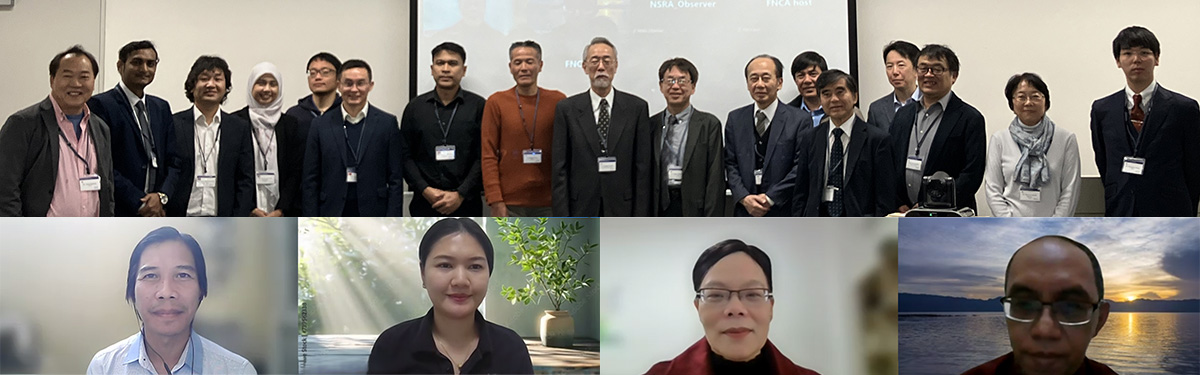
The Workshop was attended by 25 participants from 9 FNCA member countries, namely, Bangladesh, China, Indonesia, Japan, Malaysia, Mongolia, the Philippines, Thailand, and Vietnam, including workshop secretariats.
Open Seminar
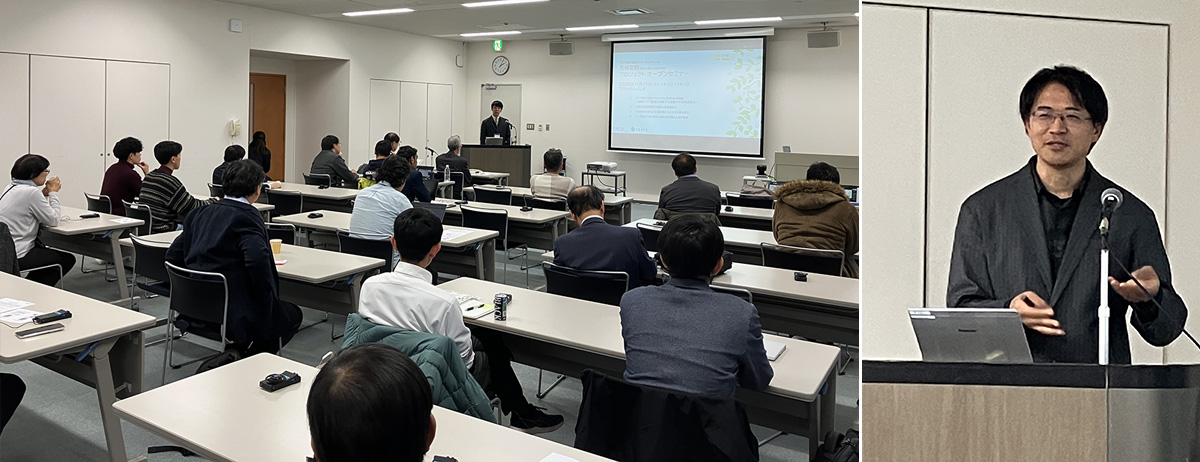
The open seminar was held in the afternoon on November 19th.
Dr. TAMADA Masao, FNCA Coordinator of Japan, provided an overview of FNCA activities. Dr. NAGANO Hirohiko, Niigata University, introduced research on soil greenhouse gas dynamics and extreme weather. Dr. Roland V. Rallos, Philippine Nuclear Research Institute, outlined exploring how land use changes affect soil carbon.
Dr. FUJII Kazumichi, Fukushima Institute for Research, Education and Innovation, presented findings on how malic acid bridges mineral weathering and carbon cycling in forest soils.
Technical Visit (Field Work)
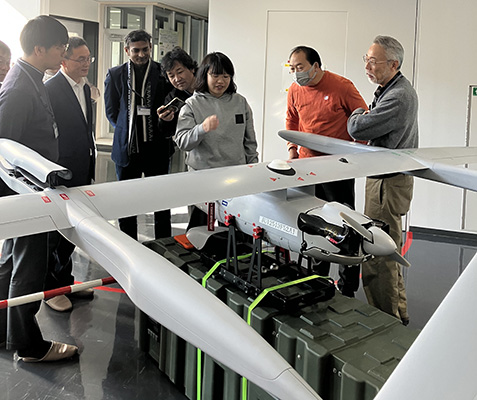
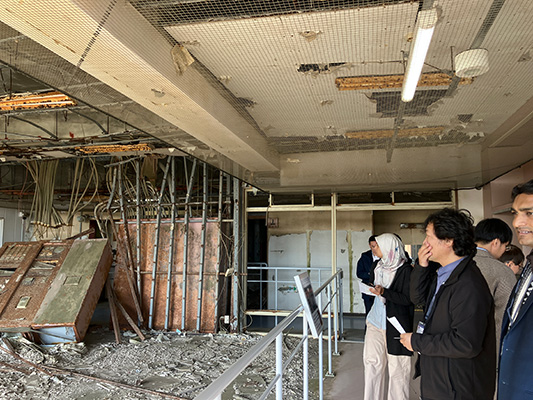
The Technical Visit was held on November 20th in Minamisoma City and Namie Town, Fukushima Prefecture. As a part of the technical visit, FNCA members toured the Collaborative Laboratories for Advanced Decommissioning Science (CLADS), Japan Atomic Energy Agency (JAEA). A CLADS researcher gave a presentation on their activities and then guided the group through the laboratories. Afterwards, the participants visited the Remains of the earthquake Namie Town Ukedo Elementary School in Namie Town.
Summary of
FNCA 2025 Workshop on Climate Change
(Evaluating the Carbon Emission from Forest Soils) Project
November 18 - 20, 2025
Fukushima, Japan
Opening Session
Mr. NAKAJIMA Shogo, Researcher, Ministry of Education, Culture, Sports, Science and Technology (MEXT), delivered welcoming remarks. Then Dr. TAMADA Masao, FNCA Coordinator of Japan expressed opening remarks.
Session 2
Dr. NAGAI Haruyasu, FNCA Climate Change (Evaluating the Carbon Emission from Forest Soils) Project Leader of Japan, outlined activities of the Project: background, objective, vision, goals and overall schedule. He also summarized the achievement in the second year of the project and explained major topics to be discussed during the workshop.
Session 3
Country reports were given by 9 member countries.
Bangladesh
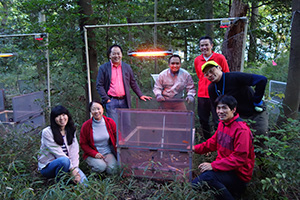
Soil samples were systematically collected from five forest ecosystems across Bangladesh using the JAEA experimental kit to assess CO2 emission from forest soils under changing climate conditions. The experimental kit demonstrated strong reliability, portability, and user-friendly ensuring reliable sample collection in the field and sample processing at laboratory settings. The field activities involved soil sampling from 0-20 cm depth and environmental data recording, followed by laboratory-based sample preparation, soil incubation, drying and gas collection. To ensure comprehensive national coverage of the soil carbon database, two additional research sites from NW and SW Bangladesh is suggested. The overall study would provide understanding of the soil carbon cycling, temperature sensitivity of CO2 emissions for Bangladesh soil, and contribute to the development of an Asian-scale database to evaluate spatial patterns and controlling factors of CO2 emission from forest soils. We sincerely acknowledge the assistance, co-operation and continued support by the JAEA.
China
In China, we originally selected 12 sites over the nation. So far, we have completed samplings from 6 sites. These sites have also included the soils samples treated with experimental long-term N addition or soil warming. Site informations, e.g., climate, soil and vegetations, and experimental designs, will be presented. In addition, I will present tree growth, soil respiration, CH4 uptake and gaseous N losses in response to 8 years of soil warming in a temperate forest of northeastern China. The measurement of soil 14C will help exploring how warming affect soil organic matter dynamics.
Indonesia
The progress of the project in Indonesia as per October 2025 as follow: (1) Sampling site was selected and surveyed, i.e. Gunung Bunder, part of Mt.Halimun-Salak National Park. However, sampling was not done yet due to permission issue such as MTA (Material Transfer Agreement). (2) The MTA draft is already submitted to the Board and now is under revision. Hopefully, the approval will be issued this November.
Japan
This year we successfully delivered the experimental kits to all collaborating researchers in nine countries. In Japan, we completed experiments at twelve of the eighteen planned research sites, including one site outside the country (Taiwan). After receiving the samples from our collaborators, we began analyzing the soils to assess organic carbon stocks. Leveraging the established collaborative framework within the Japan team, we also started measuring 14C in the soil samples by accelerator mass spectrometry and determining CO2 concentrations in the gas samples by gas chromatography.
Malaysia
This project focuses on collecting forest soil samples from selected sites in Peninsular Malaysia to evaluate carbon emissions from forest soils. Sampling was conducted between September 2024 to May 2025 at three lowland dipterocarp forests: Bangi (Selangor), Papan (Perak), and Gua Musang (Kelantan). These sites share similar ecological characteristics but differ in local conditions such as rainfall and soil texture. The sampling plan was coordinated with other ongoing activities and projects, as this study is not a standalone national project. Field samples were collected using soil sampling kits; however, challenges were encountered due to dense soils and logistical constraints. Some sites were located far from the laboratory, requiring more time for sample transport, which made maintaining sample integrity difficult. Soil sample preparation and incubation were conducted smoothly in the laboratory using the provided kits. For future work, sampling is planned to expand to hill dipterocarp and secondary forests to capture broader ecological variability, subject to site accessibility, available funding, and approval from relevant local authorities.
Mongolia
Under the FNCA Climate Change (Evaluating the Carbon Emission from Forest Soils: ECEFS) Project, the study aims to quantify carbon emissions from forest soils in Mongolia. Within the project, soil samples were collected from 5 forest sites across Mongolia, and gas samples were prepared from these soils for laboratory analysis. Currently, the samples are in the process of obtaining export permission for shipment abroad.
The Philippines
The Philippine team performed soil sampling and site characterization at multiple forest sites across the country to support FNCA carbon emission assessment from forest soils during the reporting period. The team conducted soil sampling at Visca (Baybay Leyte) and Cuyambay and Rodriguez (Rizal) and two urban-adjacent forests in Payatas and Lagro (Quezon City). At each site, we documented key ecological attributes (location, elevation, forest type, soil type, vegetation and land-use history) and collected soil samples along pre-identified transects to capture variation in topography, land use, and forest condition. These sites represent mostly secondary lowland to lower montane forests and forest fragments, selected to serve as benchmarks for soil organic carbon (SOC) dynamics and potential carbon emissions from forest soils.
In addition to soil sampling, we also carried out reconnaissance surveys, basic vegetation profiling, coordination with local LGUs and site managers, and initial mapping of sampling points. Potential additional sites in Kabankalan (Negros Occidental), Tagum (Davao del Norte), and Bukidnon were also identified to extend the network to major forested landscapes in the Visayas and Mindanao, including key watershed areas. Together, the sampled and proposed sites form a gradient from relatively intact forests to heavily fragmented urban and peri-urban forest patches. The field activities completed during this period serve as the starting point for subsequent laboratory analysis of SOC, carbon emissions and related indicators, comparative assessment across sites, and future FNCA collaborative studies to support forest conservation, restoration, and climate- and land-use-related policy in the Philippines.
Thailand
The research team has selected 5 study sites, which are 1) Mae Puak Community Forest, 2) Ban Wiang Nuea Community Forest, 3) Wang Somboon Community Forest, 4) Khao Yai National Forest and 5) Kan Tang (Khuan Jupa) National Forest. Soil samples were collected using an experimental kit provided by the FNCA. This sampling device could be driven into the ground by hand or with the support of the hoe (gently pressed to avoid soil compaction). Soil samplings were successfully conducted without any difficulty. Gas and soil samples from the incubation experiments were sent to Japan for further analysis as planned. Additionally, duplicates of soil samples were collected and analyzed on δ13C, particle size distribution (PSD), bulk density, pH, and electrical conductivity. This investigation aims to assess soil organic carbon (SOC) pool response to forest grain soil fractions. It found that differences in the soil PSD reflected the difference in the δ13C. The finding results showed that the clay-silt fractions retained the carbon derived from the forest biomass more efficiently than the coarser fractions. The δ13C values that revealed an increasing gradient of depth can be characteristic of a mixed SOC pool, one of recent and labile SOC and one of old and stable SOC. This study will be presented in “The Pure and Applied Chemistry International Conference 2026”. The event will be held on February 12-14, 2026. The article is an output of the joint FNCA research efforts. Additional sites for future study plan will be provided after thorough discussions with the research team.
Vietnam
In 2025, we successfully carried out soil and gas sampling experiments at all five selected research sites in Viet Nam: Cát Tiên, Bidoup-Núi Bà, Núi Chúa, Yok Đôn, and Phong Nha–Kẻ Bàng National Parks. Soil samples were collected according to the FNCA experimental protocol, prepared carefully, and incubated at two temperature settings-the mean annual temperature (MAT) and MAT +10°C. Gas samples were taken both before and after 24 hours of soil incubation to measure CO2 concentrations. All soil and gas samples have been properly processed, labeled, and sent to Japan for further laboratory analyses by the research team. The experiments were completed successfully under varying ecological and climatic conditions, providing valuable data for the next phase of the FNCA Climate Change project.
Session 4
Dr. KOARASHI Jun, Japan Atomic Energy Agency presented project goal and approach, status of soil and gas sampling in each country, preliminary analysis results on soil samples from 7 countries, current progress evaluation, and upcoming plans, then setting off a discussion on the analysis results and research plan.
The current progress is as follows:
- Thanks to the highly active collaborators from 10 countries, our project is now progressing.
- However, unexpected delays in the delivery of experimental kits and the import of samples have slowed down the progress in the analysis of samples, and our goal in the first phase cannot be achieved as we planned.
- To date, 37 soil samples from 7 countries (including Taiwan) are being processed for AMS. An additional 88 soil samples have been received from China; these were collected by depth-wise sampling and do not follow the project’s sampling protocol.
- Over 500 gas samples from 9 countries are currently undergoing CO2 analysis.
- We are still awaiting samples from three countries-Indonesia, Kazakhstan, and Mongolia.
- The experiments and measurements remain underway; additional time is required to complete data collection and perform the subsequent data analysis.
To complete our goal in the first phase, development of prototype database and CO2 emission model, analysis data on CO2 emission rates and Q10 values from gas samples analysis are necessary. Also, additional data derived from samples in China and three countries (Indonesia, Kazakhstan, and Mongolia), which will be received within several months, are promising to fill the gap and expand the range in climatological zone (latitude, altitude, temperature, and humidity ranges).
After discussion, the participants confirmed the following.
- The current analysis results and status of developing database and CO2 emission model are insufficient for the output in the first phase of this project.
- It is better to extend the first phase of this project for one year and complete analysis of all soil and gas samples as planned, then discuss the results at the next workshop.
- Therefore, we need to propose the extension of the first phase of this project to the Coordinator Meeting held in the coming February.
Session 5 and 6
The minutes of the workshop were discussed and agreed by all participants.
Mr. MORIMOTO Koichi, FNCA Advisor of Japan, delivered closing remarks and thanked all participants for their efforts and contribution.
Program of
FNCA 2025 Workshop on Climate Change
(Evaluating the Carbon Emission from Forest Soils) Project
November 18 - 20, 2025
Fukushima, Japan
November 18 Workshop
| 9:30-9:45 |
Opening Session
- Welcome address: Mr. Nakajima Shogo, MEXT, Japan
- Opening remarks: Dr. TAMADA Masao, FNCA coordinator of Japan
- Introduction of participants
- Group photo
|
| 9:45-10:00 |
Session 2: Outline on CC(ECEFS) project
Project Overview and Goal:
Dr. NAGAI Haruyasu, Project Leader of Japan |
| 10:00-11:00 |
Session 3: Country report (Status and need) on CC(ECEFS)
- Bangladesh
- China
|
| 11:10-11:20 |
Break |
| 11:20-12:40 |
Cont. Session3
- Indonesia
- Japan
|
| 12:40-13:40 |
Lunch Break |
| 13:40-15:10 |
Cont. Session3
- Malaysia
- Mongolia
- The Philippines
|
| 15:10-15:20 |
Break |
| 15:20-16:20 |
Cont. Session3
- Thailand
- Vietnam
|
| 16:20-17:30 |
Session 4: Discussion on Research Plan
Presentation: Dr. KOARASHI Jun, Japan
Discussion |
November 19
| 9:00-10:30 |
Session 5: Drafting of Minutes |
| 10:30-10:45 |
Break |
| 10:45-12:10 |
Session 6: Wrap up Session
Closing remarks: Mr. Morimoto Koichi, FNCA advisor of Japan |
Open Seminar -Climate Change-
| 14:00-14:10 |
Opening Remarks: Mr. NAKAJIMA Shogo, MEXT, Japan |
| 14:10-14:40 |
“Activities on Forum for Nuclear Cooperation in Asia (FNCA)”
Dr. TAMADA Masao, FNCA coordinator of Japan, Japan |
| 14:40-15:10 |
“Soil greenhouse gas dynamics and extreme weather”
Dr. NAGANO Hirohiko, Niigata University, Japan |
| 15:10-15:40 |
“Exploring how land use changes affect soil carbon”
Dr. ROLAND V. RALLOS, Philippine Nuclear Research Institute, The Philippines |
| 15:40-16:10 |
“Malic acid bridges mineral weathering and carbon cycling”
Dr. Fujii Kazumichi, F-REI, Japan |
November 20 Technical Visit
| 10:00-11:30 |
Environmental Radiation Center, Collaborative Laboratories for Advanced Decommissioning Science (CLADS) |
| 13:00-14:00 |
Remains of the earthquake Namie Town Ukedo Elementary School |
|
List of Participants
FNCA 2025 Workshop on Climate Change
(Evaluating the Carbon Emission from Forest Soils) Project
November 18 - 20, 2025
Fukushima, Japan
Bangladesh
Dr.Md. Golam Rasul
Chief Geologist and Director
Institute of Nuclear Minerals (INM)
Bangladesh Atomic Energy Commission
Mr. DAS Sudeb Chandra
Scientific Officer
Institute of Nuclear Minerals (INM)
Bangladesh Atomic Energy Commission
China
Prof. Yunting Fang
Professor/Deputy Director
Institute of Applied Ecology
Chinese Academy of Sciences
Dr. Haiyan Qian
Associate professor
East China University of Technology
Indonesia
Dr. Rasi Prasetio
Researcher, Organization for Nuclear Energy (ORTN)
National Research and Innovation Agency (BRIN)
Japan
Dr. NAGAI Haruyasu
Deputy Director General
Nuclear Science and Engineering Center
Japan Atomic Energy Agency (JAEA)
Dr. LIANG Naishen
Senior Researcher
National Institute for Environmental Studies (NIES)
Dr. ICHI Kazuhito
Professor
Center for Environmental Remote Sensing (CEReS)
Chiba University
Dr. KOARASHI Jun
Senior Principal Researcher
Japan Atomic Energy Agency (JAEA)
Dr. NAGANO Hirohiko
Assistant professor
Institute of Science and Technology
Niigata University
Dr. FUJII Kazumichi
Unit leader
Soil Homeostasis Unit, Research and Development
Fukushima Institute for Research, Education and Innovation
Dr. TAMADA Masao
FNCA Coordinator of Japan
Mr. WADA Tomoaki
FNCA Advisor of Japan
Mr. Morimoto Koichi
FNCA Advisor of Japan
Mr. NAKAJIMA Shogo
Ministry of Education, Culture, Sports, Science and Technology (MEXT)
Dr. ATARASHI-ANDOH Mariko
Principal Researcher
Japan Atomic Energy Agency (JAEA)
Dr. Nakanishi Takahiro
Principal Researcher
Japan Atomic Energy Agency (JAEA)
Ms. INOKOSHI Chiaki
Nuclear Safety Research Association (NSRA)
Ms. ISHIKAWA Kaho
Nuclear Safety Research Association (NSRA)
Malaysia
Ms. Nooradilah Binti Abdullah
Research Officer
Malaysian Nuclear Agency
Mongolia
Ph.D candidate Byambaa Ganbat
Soil researcher
Institute of Geography and geoecology
Mongolian academy of sciences
The Philippines
Mr. Roland V. Rallos
Senior Science Research Specialist
Philippine Nuclear Research Institute (PNRI)
Thailand
Mr. Wutthikrai Kulsawat
Researcher (Nuclear Scientist)
Nuclear Research and Development Center
Thailand Institute of Nuclear Technology (TINT)
Ms.Phatchada Nochit
Researcher (Nuclear Scientist)
Nuclear Research and Development Center
Thailand Institute of Nuclear Technology (TINT)
Vietnam
Mr. Phan Quang Trung
Deputy Head of Department
Department of Nuclear and Isotopic Techniques
Dalat Nuclear Research Institute
Vietnam Atomic Energy Institute
|
|